Pakistan Seals ODI Series Win with Dominant Victory Over Zimbabwe
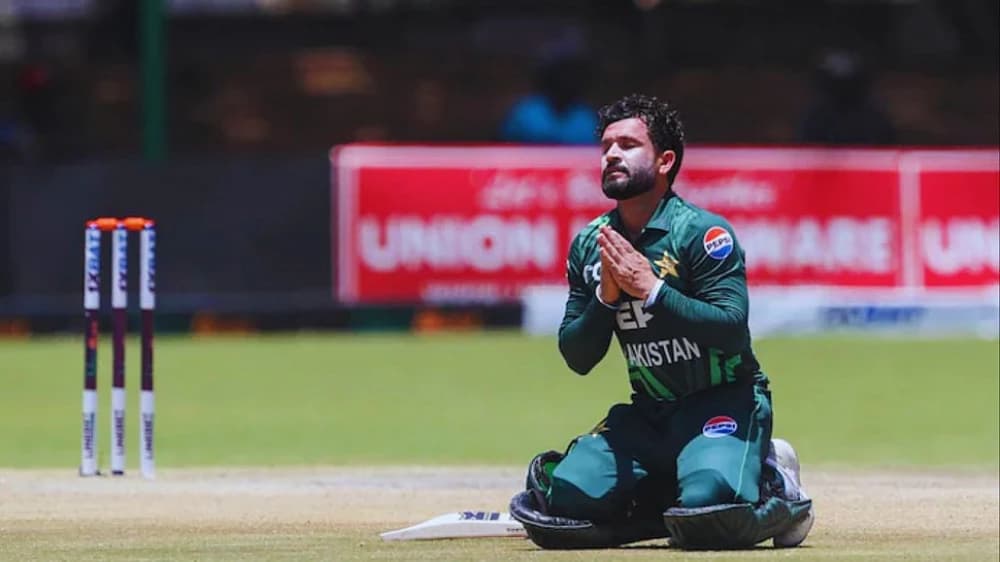
Rizwan’s leadership and a collective team effort seal a 2-1 series triumph, proving depth and resilience in the absence of key stars.
In a performance that exemplified both composure and depth, Pakistan secured a 99-run victory over Zimbabwe in the decisive third ODI in Bulawayo, sealing a 2-1 series win. Despite the absence of their stalwarts, Babar Azam and Shaheen Afridi, Pakistan's balanced side under the leadership of Mohammad Rizwan delivered a comprehensive performance to clinch their second consecutive ODI series victory. Their remarkable bounce-back from a disappointing opening defeat highlighted the character of a team that is steadily cementing its place as a formidable force in world cricket.
Opting to bat first on a pitch that offered assistance to both the bat and ball, Pakistan posted a competitive total of 303 for 6. The innings was anchored by Kamran Ghulam, who marked his arrival on the international stage with a well-crafted century. His 103 runs from 99 balls, punctuated by 10 boundaries and 4 sixes, laid the foundation for a strong total. Ghulam’s partnership with Abdullah Shafique (50 runs) was the bedrock of Pakistan’s innings, adding 89 crucial runs for the second wicket.
Despite a slow start from Rizwan (37 off 47 balls), and the absence of fireworks from the middle order, the platform set by Ghulam, Shafique, and the finishing touches from Salman Agha and Tayyab Tahir ensured that Pakistan surpassed the 300-mark. This was a gritty effort, especially given the absence of the usual heavyweights. It reinforced the depth of talent Pakistan has at its disposal, proving that even without their top stars, they remain a force to reckon with.
In a strategic move that took many by surprise, Pakistan began their bowling innings with a spin-heavy attack. The trio of Salman Ali Agha, Saim Ayub, and Abrar Ahmed dominated the early overs, a tactic that effectively neutralized Zimbabwe’s top order. The strategy paid immediate dividends when Saim Ayub delivered a double-strike in the third over, leaving Zimbabwe reeling at 10 for 2.
Ayub’s control and precision were pivotal, and his efforts were complemented by Agha and Ahmed, who kept the pressure on throughout their respective spells. The early breakthroughs set the tone for what was to follow. With Zimbabwe at 49 for 3, the match was already slipping away from the hosts, despite the steadying hands of Craig Ervine and Sean Williams.
Haris Rauf’s introduction into the attack brought immediate success, as his pace broke the budding partnership between Ervine and Williams. Rauf’s timely strike, followed by his later contributions, ensured Zimbabwe could not mount a recovery. Ervine’s valiant half-century was the only real resistance from the Zimbabwean camp, and his dismissal signaled the beginning of the end for the hosts.
Faisal Akram's economical spell further compounded Zimbabwe’s struggles as Pakistan’s disciplined bowling attack, with contributions across the board, bowled out Zimbabwe for just 204. Saim Ayub, who had been instrumental throughout the series, earned well-deserved recognition as Player of the Series for his all-round contributions.
Mohammad Rizwan, in his post-match comments, expressed immense pride in his team’s performance, highlighting the pressure they overcame to win the series. Reflecting on the defeat in the opening match, Rizwan remarked, "It is a proud feeling. We lost the first match and the expectation from the nation is very high. But we had the confidence to bounce back. We knew we would face some pressure here, away is always difficult in terms of conditions. But as professionals, we did very well, minimized our mistakes and performed well."
This series win further enhances Rizwan’s credentials as a captain. Leading a team without some of their most influential players, he managed to rally his side and guide them to a commanding victory. His leadership is now being hailed as a key factor in Pakistan’s resurgence, not only in this series but also in their broader ODI journey.
With the ODI series now concluded, Pakistan and Zimbabwe will shift their focus to the upcoming T20I series, starting December 1 in Bulawayo. Given the performances from the ODI series, Pakistan will enter the T20s with renewed confidence and a deeper pool of players to choose from. The question now is how quickly they can translate their ODI dominance into success in the shorter format.
For Zimbabwe, the task will be to regroup and recalibrate after a series of missed opportunities, especially in the face of Pakistan’s comprehensive bowling performance. They will need to focus on bolstering their middle order and countering Pakistan’s spin-heavy attack if they are to challenge the visitors in the T20 format.